Buy konzertfinder.eu ?
We are moving the project
konzertfinder.eu .
Are you interested in purchasing the domain
konzertfinder.eu ?
domain@kv-gmbh.de · 0541-91531010
Buy konzertfinder.eu ?
What is the complementary event in probability theory?
In probability theory, the complementary event is the event that consists of all outcomes that are not in the given event. It is essentially the opposite of the given event. The probability of the complementary event occurring is equal to 1 minus the probability of the given event occurring. This concept is often used to simplify calculations and make it easier to determine probabilities. **
What is a complementary event in probability theory?
In probability theory, a complementary event is the event that consists of all outcomes that are not in the given event. For example, if the event of interest is rolling a 6 on a fair six-sided die, then the complementary event would be rolling any number other than 6. The probability of the complementary event is equal to 1 minus the probability of the given event. Complementary events are useful in calculating probabilities and can help simplify calculations in certain situations. **


Similar search terms for Theory
Top-Angebote
Products related to Theory:
-
"""Quattro Theory""" """Quattro Theory Cabernet Sauvignon 2022 Red Wine - California""""""Quattro Theory's winemaker seeks to showcase the freshness and classic varietal character of the highest-quality Napa Valley Cabernet Sauvignons. Every aspect of the winemaking process is intentionally designed to ensure the wine's structure..."47,99 $*Shipping: 0,00 $Secure redirect to the provider
-
RLF Home String Theory Regal Valance"RLF Home String Theory Regal Valance. Mesmerizing pattern with lines and splats. Decorator's quality fabrics. Ivory Poly/Cotton Lining. 3"" Rod Pocket Use a 2-1/2"" Continental curtain rod, regular 3/4"" Curtain rod or tension rod. Fits Windows up to..."67,89 $*Shipping: 0,00 $Secure redirect to the provider
-
Stationery Office The Official DVSA Theory Test for Car Drivers 2026: DVSA Theory Test Cars 2026 new edPrepare to Pass Your Theory Test First Time Get ready to ace the multiple-choice section of your theory test with the number-one best-selling theory test book – the ONLY official expert revision guide. This new edition has been updated to include the latest changes to the car theory test revision questions. Key features: Practice questions: Includes ALL the official DVSA theory test revision questions for all 14 topics, so you can see how much you've learnt. From theory to practice: Things to discuss and practise with your instructor to help you apply the theory when you're behind the wheel. Bite-size information: Written in an easy-to-remember way that links the theory to your practical driving experience, helping you to really understand. Learn your way: Features loads of photos and diagrams, links to more information and videos online, hints and tips to help you learn, and expert advice on what to expect on the day. Extra help to understand the answers: Each question includes references to the official source materials, where you can learn more.17,99 £*Shipping: 2,99 £Secure redirect to the provider
-
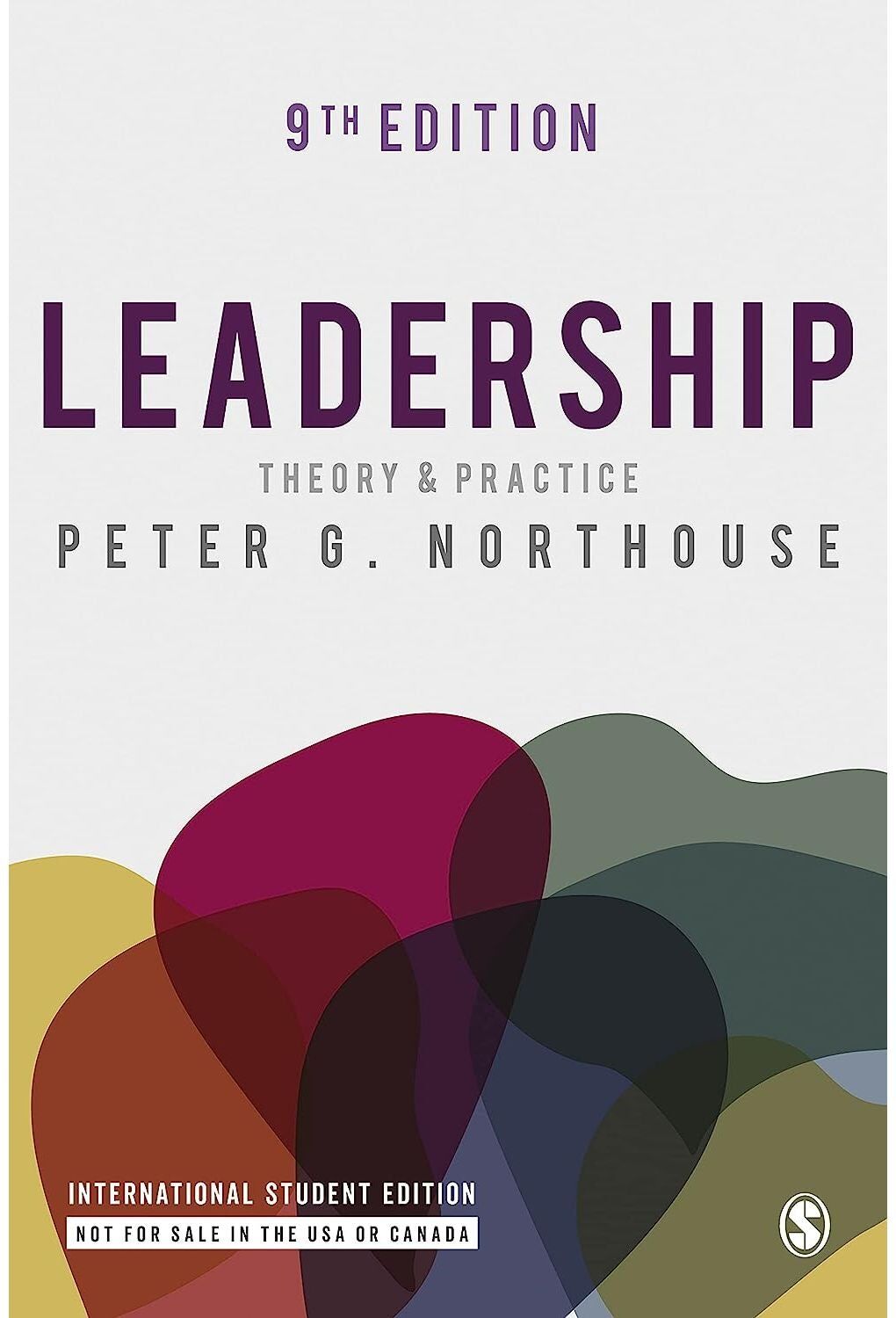
SAGE Publications Leadership - International Student Edition: Theory and PracticeThe market-leading Leadership: Theory and Practice by Peter G. Northouse presents an academically robust account of the major theories and models of leadership with a focus on how theory can inform practice. Case studies and questionnaires provide students with practical examples and opportunities to deepen their understanding of their own leadership style.The fully updated Ninth Edition features a new chapter on inclusive leadership, 17 new real-world cases that profile leaders from across the globe, a new discussion on leadership and morality, and examples of timely issues such as leadership during the COVID-19 pandemic. Key features include: A consistent chapter structure that outlines each approach and the major studies behind them, presents strengths and criticisms for each approach, and provides case studies and a self-assessment questionnaire at the end of each chapter, allowing students to easily compare and contrast the various theories. Three case studies in each chapter help students to apply leadership concepts in real-world scenarios. Self-assessments within each chapter provides self-assessment and reflection opportunities for each theory presented.45,49 £*Shipping: 0,00 £Secure redirect to the provider


-
What is the Motive-Music Theory?
The Motive-Music Theory is a concept in music theory that focuses on the smallest identifiable musical unit, known as a motive. This theory suggests that motives are the building blocks of musical composition and can be used to create coherence and unity within a piece of music. By analyzing and manipulating motives, composers can develop themes, variations, and transformations that contribute to the overall structure and meaning of a musical work. The Motive-Music Theory is a valuable tool for understanding how composers craft their music and create connections between different sections of a composition. **
-
How can I relearn music theory?
To relearn music theory, you can start by reviewing the basics such as note reading, scales, and key signatures. You can also use online resources, books, or enroll in a music theory class to refresh your knowledge. Practice applying the theory to your instrument or voice to reinforce your understanding. Additionally, consider finding a music teacher or tutor who can provide personalized guidance and feedback as you relearn music theory. **
-
What is music theory and analysis?
Music theory and analysis is the study of the structure and elements of music, including harmony, melody, rhythm, and form. It involves understanding how music is put together and how it functions, as well as the principles and rules that govern musical composition. Analysis involves breaking down a piece of music to understand its components and how they work together to create the overall effect. Music theory and analysis are essential for musicians and composers to understand and communicate musical ideas effectively. **
-
How do I start learning music theory?
To start learning music theory, it is recommended to begin with the basics such as understanding the musical alphabet, scales, and key signatures. You can also familiarize yourself with basic music notation and terminology. There are many online resources, books, and courses available to help you learn music theory at your own pace. It is also beneficial to practice applying what you learn by playing an instrument or composing music. **


Which books are recommended for music theory?
Some recommended books for music theory include "Tonal Harmony" by Stefan Kostka and Dorothy Payne, "The Complete Idiot's Guide to Music Theory" by Michael Miller, and "Music Theory for Dummies" by Michael Pilhofer and Holly Day. These books cover a wide range of topics in music theory, from basic concepts to more advanced techniques. Additionally, "The Jazz Theory Book" by Mark Levine is highly recommended for those interested in jazz music theory. **
What is the music theory of triads?
Triads are three-note chords that are built by stacking notes in thirds. There are four types of triads: major, minor, augmented, and diminished. Major triads are built with a root, major third, and perfect fifth, while minor triads have a root, minor third, and perfect fifth. Augmented triads have a root, major third, and augmented fifth, and diminished triads have a root, minor third, and diminished fifth. Triads are the building blocks of harmony in Western music and are essential for understanding chord progressions and harmonic function. **
Top-Angebote
Products related to Theory:
-
"""Quattro Theory""" """Quattro Theory Chardonnay 2022 White Wine - California""""""Working with cool-climate fruit, Quattro Theory achieves a Napa Valley Chardonnay that is more traditional in style with balanced acidity, minimal oak and non-malolactic fermentation to highlight a full range of varietal fruit expression, taking..."34,99 $*Shipping: 0,00 $Secure redirect to the provider
-
"""Quattro Theory""" """Quattro Theory Sauvignon Blanc 2023 White Wine - California""""""Quattro Theory's winemaker, Landon Donley, considers Sauvignon Blanc to be the premier white wine of Napa Valley. Quattro Theory Sauvignon Blanc is classic in style and captures the best expression of Napa Valley: vibrant citrus and stone fruit..."26,97 $*Shipping: 0,00 $Secure redirect to the provider
-
"""Quattro Theory""" """Quattro Theory Cabernet Sauvignon 2022 Red Wine - California""""""Quattro Theory's winemaker seeks to showcase the freshness and classic varietal character of the highest-quality Napa Valley Cabernet Sauvignons. Every aspect of the winemaking process is intentionally designed to ensure the wine's structure..."47,99 $*Shipping: 0,00 $Secure redirect to the provider
-
RLF Home String Theory Regal Valance"RLF Home String Theory Regal Valance. Mesmerizing pattern with lines and splats. Decorator's quality fabrics. Ivory Poly/Cotton Lining. 3"" Rod Pocket Use a 2-1/2"" Continental curtain rod, regular 3/4"" Curtain rod or tension rod. Fits Windows up to..."67,89 $*Shipping: 0,00 $Secure redirect to the provider
-
What is the complementary event in probability theory?
In probability theory, the complementary event is the event that consists of all outcomes that are not in the given event. It is essentially the opposite of the given event. The probability of the complementary event occurring is equal to 1 minus the probability of the given event occurring. This concept is often used to simplify calculations and make it easier to determine probabilities. **
-
What is a complementary event in probability theory?
In probability theory, a complementary event is the event that consists of all outcomes that are not in the given event. For example, if the event of interest is rolling a 6 on a fair six-sided die, then the complementary event would be rolling any number other than 6. The probability of the complementary event is equal to 1 minus the probability of the given event. Complementary events are useful in calculating probabilities and can help simplify calculations in certain situations. **
-
What is the Motive-Music Theory?
The Motive-Music Theory is a concept in music theory that focuses on the smallest identifiable musical unit, known as a motive. This theory suggests that motives are the building blocks of musical composition and can be used to create coherence and unity within a piece of music. By analyzing and manipulating motives, composers can develop themes, variations, and transformations that contribute to the overall structure and meaning of a musical work. The Motive-Music Theory is a valuable tool for understanding how composers craft their music and create connections between different sections of a composition. **
-
How can I relearn music theory?
To relearn music theory, you can start by reviewing the basics such as note reading, scales, and key signatures. You can also use online resources, books, or enroll in a music theory class to refresh your knowledge. Practice applying the theory to your instrument or voice to reinforce your understanding. Additionally, consider finding a music teacher or tutor who can provide personalized guidance and feedback as you relearn music theory. **
Similar search terms for Theory
-
Stationery Office The Official DVSA Theory Test for Car Drivers 2026: DVSA Theory Test Cars 2026 new edPrepare to Pass Your Theory Test First Time Get ready to ace the multiple-choice section of your theory test with the number-one best-selling theory test book – the ONLY official expert revision guide. This new edition has been updated to include the latest changes to the car theory test revision questions. Key features: Practice questions: Includes ALL the official DVSA theory test revision questions for all 14 topics, so you can see how much you've learnt. From theory to practice: Things to discuss and practise with your instructor to help you apply the theory when you're behind the wheel. Bite-size information: Written in an easy-to-remember way that links the theory to your practical driving experience, helping you to really understand. Learn your way: Features loads of photos and diagrams, links to more information and videos online, hints and tips to help you learn, and expert advice on what to expect on the day. Extra help to understand the answers: Each question includes references to the official source materials, where you can learn more.17,99 £*Shipping: 2,99 £Secure redirect to the provider
-
SAGE Publications Leadership - International Student Edition: Theory and PracticeThe market-leading Leadership: Theory and Practice by Peter G. Northouse presents an academically robust account of the major theories and models of leadership with a focus on how theory can inform practice. Case studies and questionnaires provide students with practical examples and opportunities to deepen their understanding of their own leadership style.The fully updated Ninth Edition features a new chapter on inclusive leadership, 17 new real-world cases that profile leaders from across the globe, a new discussion on leadership and morality, and examples of timely issues such as leadership during the COVID-19 pandemic. Key features include: A consistent chapter structure that outlines each approach and the major studies behind them, presents strengths and criticisms for each approach, and provides case studies and a self-assessment questionnaire at the end of each chapter, allowing students to easily compare and contrast the various theories. Three case studies in each chapter help students to apply leadership concepts in real-world scenarios. Self-assessments within each chapter provides self-assessment and reflection opportunities for each theory presented.45,49 £*Shipping: 0,00 £Secure redirect to the provider
-
Vans OLD SKOOL TAPERED UNISEX - Trainers - Theory Oatmeal - Size 12Overview The Vans Old Skool Tapered Trainers deliver a modern, slimmed-down interpretation of the iconic Vans silhouette. Designed for everyday comfort and timeless street style, these unisex trainers combine versatility with a lightweight fit, making them ideal for casual wear, skate style outfits, and all-day use. Key Features Sleeker, tapered redesign of the classic Vans Old Skool Premium canvas upper in Theory Oatmeal for a clean, neutral look Signature Vans Sidestripe detailing Cushioned insole for everyday comfort Durable rubber waffle outsole for superior grip Lightweight construction for an easy, flexible fit Lace-up closure for a secure and customisable feel Unisex design suitable for all genders Size UK 12 Benefits These Vans Old Skool Tapered Trainers offer the perfect blend of classic Vans heritage and a more refined modern shape. The slim profile enhances comfort and styling flexibility, while the durable waffle sole ensures long-lasting wear. Their neutral Theory Oatmeal finish pairs easily with any outfit, making them an ideal choice for urban lifestyles, everyday fashion, and anyone wanting a versatile trainer with iconic appeal. Specifications Table Specification Details Model Old Skool Tapered Unisex Colour Theory Oatmeal Size UK 12 Upper Material Canvas Sole Waffle Rubber Outsole Closure Lace-Up Fit Tapered, Slim Profile Gender Unisex Style Casual / Lifestyle / Skate-Inspired76,99 £*Shipping: 0,00 £Secure redirect to the provider
-
"""Brown Estate""" """Brown Estate Chaos Theory 2023 Red Wine - California""""""Dark garnet core, ruby rim. On the nose, white flowers, fresh cut herbs, bright Bing cherry followed by cola, clove, and vanilla. Secondary traces of tobacco, powdered cocoa, and dried citrus peel. Deep and rich on the palate with ripe red and..."38,97 $*Shipping: 0,00 $Secure redirect to the provider
-
What is music theory and analysis?
Music theory and analysis is the study of the structure and elements of music, including harmony, melody, rhythm, and form. It involves understanding how music is put together and how it functions, as well as the principles and rules that govern musical composition. Analysis involves breaking down a piece of music to understand its components and how they work together to create the overall effect. Music theory and analysis are essential for musicians and composers to understand and communicate musical ideas effectively. **
-
How do I start learning music theory?
To start learning music theory, it is recommended to begin with the basics such as understanding the musical alphabet, scales, and key signatures. You can also familiarize yourself with basic music notation and terminology. There are many online resources, books, and courses available to help you learn music theory at your own pace. It is also beneficial to practice applying what you learn by playing an instrument or composing music. **
-
Which books are recommended for music theory?
Some recommended books for music theory include "Tonal Harmony" by Stefan Kostka and Dorothy Payne, "The Complete Idiot's Guide to Music Theory" by Michael Miller, and "Music Theory for Dummies" by Michael Pilhofer and Holly Day. These books cover a wide range of topics in music theory, from basic concepts to more advanced techniques. Additionally, "The Jazz Theory Book" by Mark Levine is highly recommended for those interested in jazz music theory. **
-
What is the music theory of triads?
Triads are three-note chords that are built by stacking notes in thirds. There are four types of triads: major, minor, augmented, and diminished. Major triads are built with a root, major third, and perfect fifth, while minor triads have a root, minor third, and perfect fifth. Augmented triads have a root, major third, and augmented fifth, and diminished triads have a root, minor third, and diminished fifth. Triads are the building blocks of harmony in Western music and are essential for understanding chord progressions and harmonic function. **
* All prices are inclusive of VAT and, if applicable, plus shipping costs. The offer information is based on the details provided by the respective shop and is updated through automated processes. Real-time updates do not occur, so deviations can occur in individual cases. ** Note: Parts of this content were created by AI.